







Self-Service Cash Deposit Terminals for Retail Betting Operators
A betting operator running its own retail network needed a way to let players fund online accounts with cash, without routing every deposit through a cashier. BSW built and deployed self-service terminals wired directly into the operator's betting platform.
No cashiers
needed on site
Installed & maintained
by our team
Built for
offline-heavy markets
Context
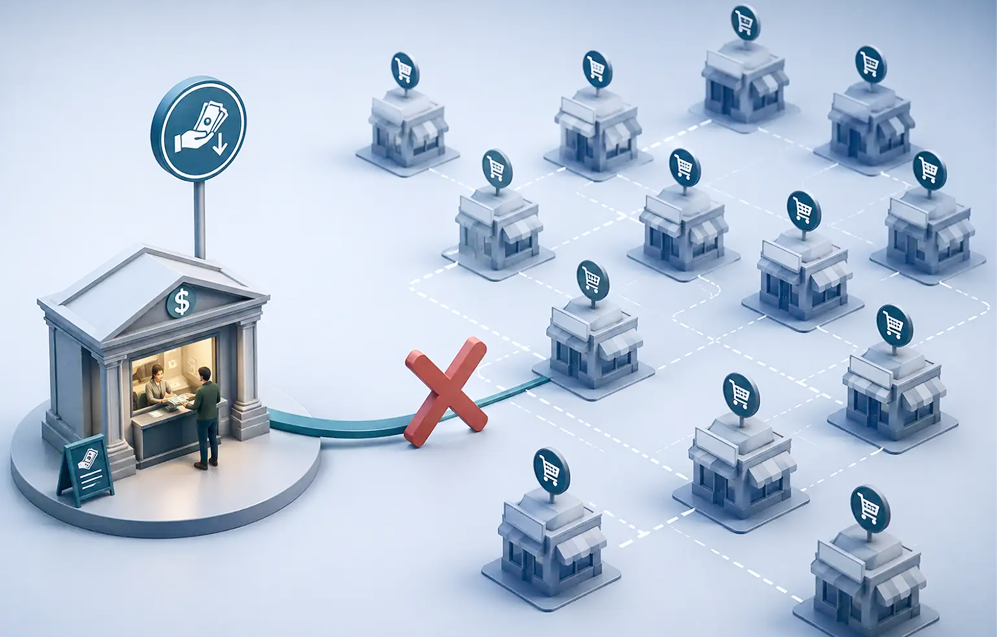
In markets where a large share of players still transact in cash, a retail network is both an asset and a bottleneck. Every deposit needs a staff member to accept the cash, key in the amount, and credit the right account, a queue-generating, error-prone step that caps how many transactions a counter can process in a shift. The operator wasn’t trying to move players away from cash. Cash was the funding method that worked for its customer base.
Problem: Manual Cash Deposits Limited Retail Scalability
What limited growth wasn’t demand. It was how many manual cash transactions a single cashier could physically process before the line got too long to be worth waiting in. Every deposit needed a staff member to accept the cash, key in the amount, and credit the right account, capping how many transactions a counter could handle in a shift.
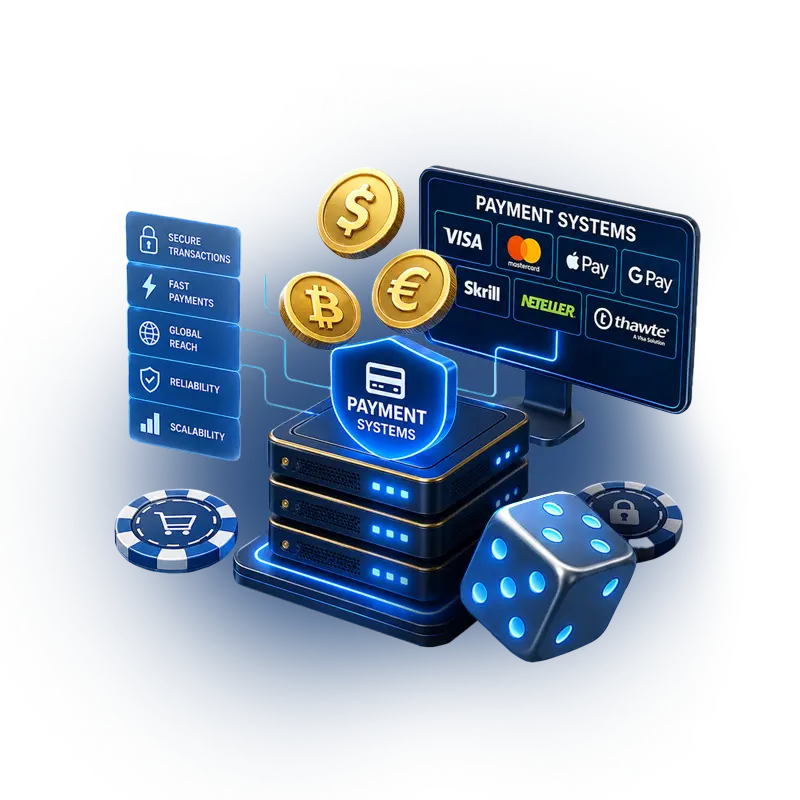
Problem: Self-Service Infrastructure for Cash-Heavy Betting
A player who used to hand cash to a person at a counter needed a faster path that still used the same cash and the same online account. No bet is ever placed at the terminal itself, it functions purely as a deposit device, moving cash into an account the player already uses for online or retail betting.
Approach: intro
The terminal doesn’t replace cash. It replaces the cashier. BSW deployed terminals wired directly into the operator’s platform so the deposit step no longer needed a person at the counter.

Every Cash Deposit Required Staff Intervention
A player who used to hand cash to a person at a counter now inserts it into a terminal that credits the same online account in seconds, with no one manually keying in the transaction. Removing the person from that sequence didn’t change what the player was doing. It removed the wait and the chance of a cashier mistyping an amount.
Self-Service Terminals Integrated with the Betting Platform
The rollout covered installation, integration, monitoring, and ongoing support as one connected deployment, not a standalone box dropped into a location.
- Terminal installation and configuration at retail locations
- Direct integration with the platform and payment infrastructure
- Centralized monitoring and remote terminal management
- Ongoing maintenance, updates, and technical support

Player Journey
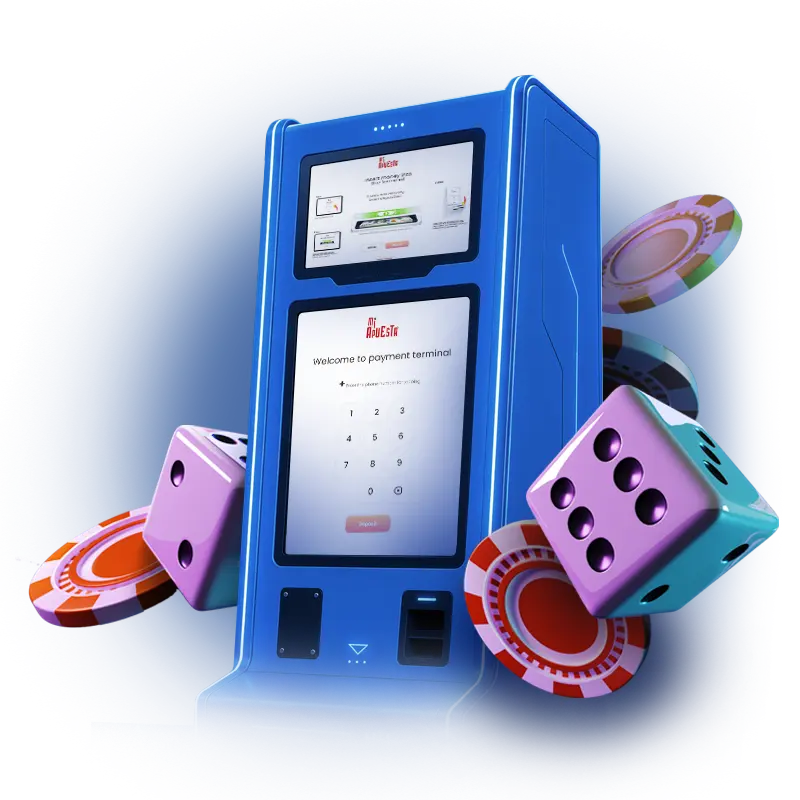
- Enter phone number, account created automatically
- Insert cash and confirm the amount
- Deposit posts to the balance instantly


Running a cash-heavy
retail betting network?
retail betting network?
BSW builds self-service terminals wired straight into your platform so deposits stop depending on counter staff.
Implementation intro
A terminal network fails quietly if nobody’s watching it. A jammed cash acceptor or a terminal stuck offline can go unnoticed for an entire shift without centralized visibility, which is why BSW built monitoring into the deployment from day one.A terminal network fails quietly if nobody’s watching it. A jammed cash acceptor or a terminal stuck offline can go unnoticed for an entire shift without centralized visibility, which is why BSW built monitoring into the deployment from day one.
Large Terminal Networks Were Difficult to Manage Manually
BSW built remote monitoring into the deployment from the start, so the operator’s team can check terminal status, transaction volume, and maintenance flags from one dashboard instead of calling each location individually. This deployment sits alongside similar builds BSW has delivered for operators in cash-heavy markets, including projects across Latin America and Tunisia, each configured to that operator’s specific payment and platform setup.

Centralized Monitoring and Remote Terminal Management
Ongoing technical support and update cycles run through the same infrastructure, so adding a new terminal to a new location doesn’t require a separate support arrangement for that site.
- One dashboard for status, volume, and maintenance flags
- Shared support infrastructure across all locations
- No separate setup needed per new site

Results
Retail staff stopped handling the deposit step directly, freeing them up for other counter work instead of queue management. The operator could add terminals to new locations without adding a proportional number of staff, since the terminal carries the transaction load instead of a person. Deposits that used to depend on a cashier’s availability and accuracy became instant, closing the gap between a player deciding to deposit and the funds landing in their account.

Conclusions
The practical outcome is a retail network the operator can grow without growing headcount at the same rate, and a customer experience no longer gated by how long the counter line happens to be. For operators running cash-heavy retail networks, queue length is often the real ceiling on growth, not player demand.
FAQ
Does the terminal accept bets?
No. It works only as a deposit device. The player still places bets through the operator’s usual online or retail channels once the funds are in their account.
Can a terminal serve a player without an existing account?
Yes. During the phone number step, the system creates an account automatically if none exists, so a first-time player can start with a deposit instead of a separate sign-up step.
Other Cases

Launching a Casino Platform in Central Asia
BSW helped a casino operator launch in Central Asia, building an independent app ecosystem, localized multi-currency payments, and a community network.
Multilingual SEO Strategy for a Sportsbook Across African Markets
An international sportsbook platform operating across several African markets grew organic traffic by 700% and user registrations by 350% within the campaign period.

Scaling an Agent-Driven Platform to 31M Players in LATAM
Scaling an iGaming platform in Latin America requires more than infrastructure, it requires technology built around agent networks.
iGaming Case Study: API Integration and Game Aggregation in Argentina
Three licensed Argentine operators moved from direct, provider-by-provider integrations to BSW's single API integration: a Buenos Aires online casino.

Fast-Launch Casino Platform in Argentina: A Case Study
A regional betting agent in Argentina used BSW's ready-made iGaming casino platform, built on an aggregated network of 150+ game providers, for a fast casino launch.
Our Products
White Label

- Go live in Just 35 Days
- Flexible customization
- 24/7 live support
Launch under your own brand using ready infrastructure managed by our team.
Learn moreTurnkey Platform

- Go live in ~3 months
- Fully custom development
- 24/7 live support
A fully custom iGaming platform built around your business.
Learn moreDemetra

- Go live in ~1 day
- Template-based customization
- 24/7 live support
A fast-launch casino website built for quick market entry and low upfront cost.
Learn moreCrypto Casino

- Launch from 35 days
- Available in 30+ countries
- Supports 20+ languages
Launch a casino built for crypto payments.
Learn moreAPI Integration

- 150+ providers, 10,000+ games
- Low rev-share percentage
- 24/7 technical support
Connect providers, games, and modules to your existing platform through one unified API.
Learn moreTop-up terminals

- Cash-to-online flow
- Complete setup service & ongoing tech support
- Centralized control
Turn offline cash deposits into online player activity through connected retail terminals. Ideal for betshops.
Learn moreSportsbook

- Live betting
- Full customization
- Integration with any platform
Add real-time sports betting to your business with a complete sportsbook engine.
Learn more


Building
a cash-heavy
retail network?
Tell us about your locations and volume. BSW will map out the terminal rollout, timeline, and support plan.