





Online Gambling
Software Provider
Most software providers hand over a build and disappear once it's live. An online casino software provider that stays is the company still running everything an operator needs to accept real bets – the games, the wallet, the compliance layer – long after launch.
years on the market
providers
employees
bets monthly
payment systems
clients from Latin America
BSW covers three verticals this way: casino, sports betting, lottery, from license-ready configuration through whatever comes after.
The harder, less glamorous work – patching game providers as new studios sign on, adjusting to a jurisdiction’s next compliance update, keeping slot RNG certifications current – is where a casino operator actually needs a partner still answering the phone.
What a Full-Cycle
Online Casino Provider Actually Covers
Three verticals, one back end:
| Vertical | What's included | Where it fits |
|---|---|---|
| Casino | Slots, table games, live dealer, single game aggregator | Core vertical for nearly every new brand |
| Sports betting | Pre-match and live odds, risk management tools, shared betting engine | Added alongside or after casino, same account and back office |
| Lottery | Draw-based and instant-win products | Optional add-on for brands expanding beyond casino and betting |
None of this is forced onto every build. A crypto-first brand might skip lottery entirely; a betting-led operator might barely touch table games during the first year. The point of calling it modular is that the mix gets scoped to what the operator’s market actually wants, not what the provider’s roadmap happens to include.

From Licensing to Launch
Compliance readiness. RNG certification, game fairness testing, responsible gaming rules, and jurisdictional rule alignment come first. A build that skips this step tends to stall at the licensing stage rather than the technical one.
Platform configuration. Branding, payment corridors, and the specific mix of casino games, betting markets, or lottery products the operator wants live get set up around the target geo.
Integration. Payment systems and game studios get wired in through API, plus crypto casino rails where that’s part of the model.
Launch and operation. Once live, most of the ongoing relationship is monitoring, new content onboarding, and adjusting to whatever the regulator changes next.
“Regulation of iGaming is spreading to new parts of the world.”
This is exactly why the compliance step can’t be an afterthought squeezed in after the build is already live. A platform designed around one jurisdiction’s rules from day one adapts faster when the next market opens than one retrofitted for it later.
Licensing itself is the operator’s responsibility, not the provider’s. BSW builds the platform to run cleanly once a license is secured. The legal process of getting there – and its timeline, which varies by jurisdiction – stays with the operator.
Casino Games: Slots, Tables, and Live Dealer
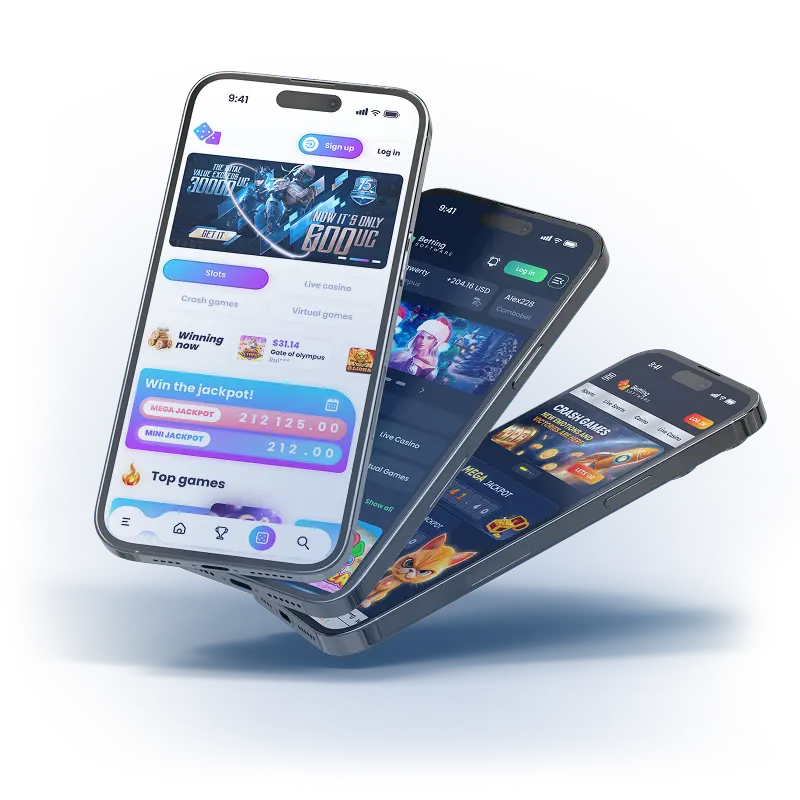
The game portfolio is usually where operators first judge a provider. Video slots with progressive jackpots still drive most casino revenue, and the aggregator layer determines how many of them an operator can actually reach – hundreds of titles through one connection against a handful through direct deals. Table games (blackjack, roulette, baccarat) round out the classic casino offering. A live casino floor streamed from studio partners gives operators the in-person feel players increasingly expect from an online casino gaming session. It’s the kind of detail that drives player engagement more than any bonus feature.
The technical detail that matters here, and rarely gets mentioned: RNG certification isn’t a one-time badge. Slot providers re-certify periodically, and a platform needs to track which certifications are current across every studio in its aggregator. Otherwise, a regulator audit turns into a scramble.
What Separates the Best
Online Gambling Software Providers
Feature lists tend to look similar across the best online casino software providers. Casino, betting, payments, back office — on paper, it’s all there. What actually differs shows up in three places. How many verticals a single vendor genuinely owns end to end. How much regional compliance work is already built in, rather than integrated into per market. And whether the relationship continues past launch, or ends at handover.
Most of BSW’s active work runs through Latin America, MENA, and Africa. Tunisia and Argentina stand out as markets where local payment behavior and licensing timelines shape how a platform actually gets built, not just where it’s deployed. Past builds and a running client list reflect that focus, and the pattern includes a handful of high-turnover projects already live across Latin America and Tunisia – nothing named publicly, but consistent across both regions.
FAQ
What does an online casino software provider actually deliver?
The full technical stack behind real-money gaming – casino games, payments, player accounts, and compliance tools – configured to work as one system, plus ongoing support once the product is live.
Does BSW only build casino platforms, or other verticals too?
Casino, sports betting, and lottery, built on the same back end so an operator can add a vertical later without a separate system.
Who handles betting software licensing – BSW or the operator?
The operator. Licensing and legal authorization vary by jurisdiction and stay outside what any software provider, BSW included, can substitute for.
How are online slot and live dealer games sourced?
Through a game aggregator connected to multiple studios – including platform providers like Pragmatic Play and Ezugi – rather than one integration per provider, which is what keeps the game portfolio growing without a new technical project each time.
Which markets does BSW usually build for?
Mostly Latin America, MENA, and Africa, with Tunisia and Argentina among the most active right now – the build itself, though, isn’t tied to any one region.



Discuss Your
Development Project
The right combination of modules and payment methods depends on the operator and the market. The next step is a direct conversation about scope and timeline.