






Start an Online Gambling Business

What Is a Gambling Business and How Does It Earn?
A gambling company makes bets or provides games and software for those bets, earning profit from margin included in each transaction. Statistics from the USA give us the picture. According to the American Gaming Association, commercial gaming revenue reached $78.72 billion in 2025, up 9.2 percent year over year. Legal state-regulated gaming also generated $18.09 billion in gaming tax revenue. iGaming was the fastest-growing major segment, with revenue reaching $10.74 billion, up 27.6 percent.
This kind of development draws even more companies to online gambling. Almost all of them make a mistake choosing where to start.
Which Gambling Business Idea Fits Your Budget?
Every niche has its own license and cash requirement. Choose the model before you choose anything else.
| Niche | How it earns | Entry point |
|---|---|---|
| Online casino | House edge on slots and table games, as well as live blackjack | Platform plus game providers |
| Sportsbook | Margin built into the odds on every bet | Odds feed, trading, and risk tools |
| Lottery | Ticket sales minus the prize pool | Often state-controlled or tightly licensed |
| Betting exchange | Commission on matched bets | Needs liquidity before it works |
| Crypto casino | The same edge, paid in coins | Wallet setup and strict AML controls |
| Prediction market | Fees on event contracts | Legal status is still contested |
| B2B supplier | Revenue share or license fees from operators | Games, platforms, or payments |
A betting exchange without liquidity is an empty room, so most newcomers skip it. Casino games and a sportsbook are easier to start because the product is known and the suppliers are plentiful. Prediction markets look tempting, but the AGA says state-regulated books have already lost over half a billion dollars in potential tax revenue to them. Regulators haven’t settled that fight.
Profitable online gambling usually begins with one product in one market. A gambling business idea that tries to launch every product at once tends to spend its budget before any player deposits.

Market Analysis Before You Spend a Dollar
Look at what players actually do. For example, sports betting in the US in 2025 yielded $166.94 billion in bets but only took $16.96 billion of them, which is a 22.8% revenue increase. Two players, FanDuel and DraftKings, control almost three-quarters of the sports betting revenue in the online space, according to Track360 interpretation of regulatory data. Such fierce competition will not be outplayed by a newbie through more generous bonuses on registration.
Small competitors find success in identifying markets that big companies neglect. Most clients of BSW create their products for Latin America, MENA, and Africa, where local payment solutions play as crucial a role in the development of the product as the sport itself. Analyze the market you target first, and then consider three important aspects: the existing number of depositing players, trusted payment options, and regulator openness for new companies.
Gambling License and Jurisdiction: What Each Costs
Without a license, you’re operating illegal gambling, and payment processors will find out before you do. The fee gap between jurisdictions is wide.
| Jurisdiction | Application fee | Annual fee | Worth knowing |
|---|---|---|---|
| Curaçao | €4,592 | €47,450 for B2C | Direct licensing under the LOK law, in force since December 2024 |
| Isle of Man | £5,250 | £36,750 for a full license | One license covers every vertical, local company required |
| Anjouan | About €17,800 with due diligence | About €15,000 | Adviser estimates, confirm with the authority |
| United Kingdom | Banded by yield | Banded by yield | Operating license fees are rising 25 percent under the 2026 review |
Fees are the small part. Legal counseling alone costs $10,000 to $100,000 based on how complex your setup is, and some regulators will require local directors or annual auditing in addition. Any platform catering to British players must also be licensed by the UK Gambling Commission, which requires integration with GAMSTOP and strict scrutiny.
BSW doesn’t issue or arrange licenses, and no software supplier can take their place. The licensing process remains with the operator, varies from nation to nation, and needs an examination by a gaming lawyer prior to signing a vendor agreement.
Legal requirements follow the license. Prepare yourself for identity verification, age verification aimed at excluding minors, anti-money laundering policies, and software that encourages responsible gambling. Think of this list as a prerequisite for launch since that is precisely what regulators demand. Legalization continues as well. Sports betting is legal in 39 US states and D.C., according to industry sources, with 30 states allowing internet sports betting.
Software Development, Payments and Support
You have two real options for the platform. Building from scratch takes a software development team and a long wait. Buying a ready core and shaping it takes far less. BSW’s custom platform is the second kind, with a casino and sportsbook under your brand and a launch in as little as one day. Content arrives through a single integration with 150+ providers and 10,000+ games, listed on the game providers page.
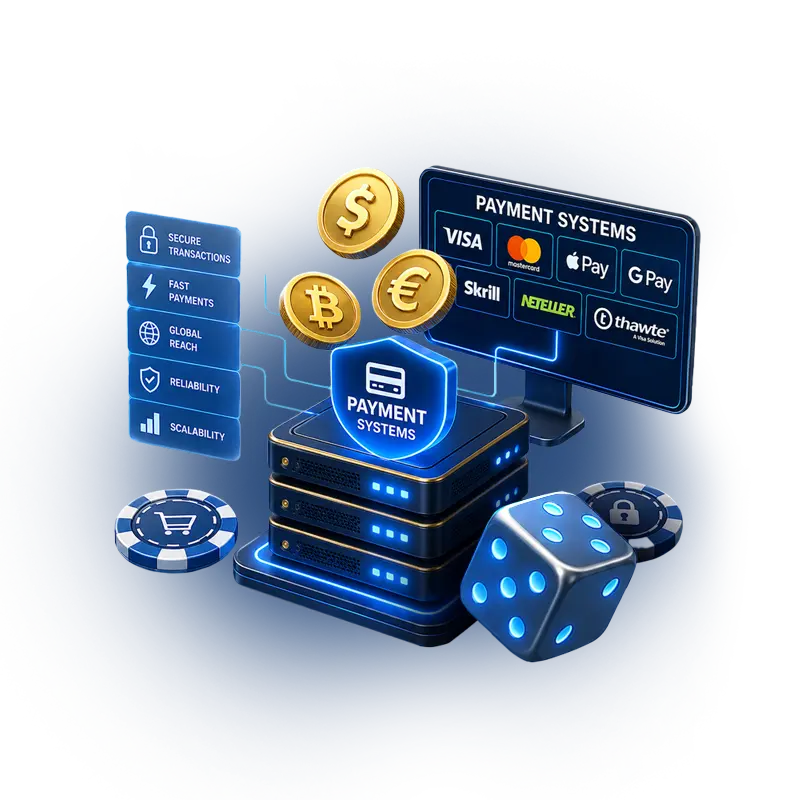
Payments decide whether players stay. Secure payment methods need to match what people already use in your target country, whether that’s cards, e-wallets, or local cash networks. See which ones BSW connects on the payment systems page. Cryptocurrencies widen reach, and USDT deposits settle fast, but regulators treat them as high risk. Curaçao’s 2026 crypto guideline is blunt about that.
Customer support belongs in the budget from day one. Players who wait an hour for a withdrawal answer don’t come back. Automation helps with routine KYC checks and bonus rules, while humans handle disputes.

Marketing Strategy That Doesn't Burn Cash
Acquisition is the line item that sinks most new operators. A player who deposited $50, took the bonus, left, and didn’t return – it’s a loss of money for you. In the campaign that should be successful, there should be the involvement of the affiliates, SEO, and CRM, and there will be monitoring of lifetime value, and not just signups. Gamification through missions and leaderboards is another way of encouraging people to return to the website without increasing costs.
Start and grow in this sequence. Launch in one country, understand what retention means, plug the leaks, and only then launch in another country. The sustainable growth usually doesn’t result from replication of the competitor’s welcome package.

Roadmap for a First-Time Operator
- Select niche and target country.
- Complete market analysis and determine budget.
- Select jurisdiction and file application for the license.
- Choose a platform and game providers, not to mention payment methods.
- Establish KYC and responsible gaming mechanisms, as well as support.
- Test using real money and launch the casino.
If you’d rather skip the build, BSW delivers a custom platform for casinos and sportsbooks. Talk to the team through the white-label page.
FAQ
How much does it cost to start an online gambling business?
Public license fees range from about €15,000 to €50,000 a year, depending on the jurisdiction. Software, game content, payment setup, marketing, and a team come on top, and vendor quotes decide the total.
How profitable is a gaming business?
The industry is profitable, with US commercial gaming revenue reaching $78.72 billion in 2025. A single operator’s profit depends on volume, taxes, bonuses, and acquisition costs.
What are the different types of gambling businesses or activities?
Online casinos, sportsbooks, lotteries, betting exchanges, crypto casinos, prediction markets, and B2B suppliers. Each earns differently and meets different rules.
What are the key steps to starting an online gambling business?
Pick a niche, choose a jurisdiction and license, select software and payments, set up compliance and support, test, and launch in a single market before scaling.
What are the legal and licensing requirements for a gambling business?
A license from the regulator in each target market, identity checks, anti-money-laundering controls, responsible gambling tools, and tax registration. Requirements vary by country, so confirm them with a lawyer.
What is the 90% rule in gambling?
It is a US tax rule. For tax years beginning after December 31, 2025, gambling losses can be deducted only up to 90%. A player with $10,000 in winnings and $8,000 in losses can deduct $7,200 and owes tax on $2,800. The cap also reaches expenses of professional gamblers, such as travel.
What are the pros and cons of gambling as a business?
The pros are a built-in margin, recurring players, and global demand. The cons are licensing costs, heavy compliance, high acquisition costs, and strong competition.



Ready to
launch your business?
An advanced provider of betting software operating globally. A wide range of innovative products and services for both sports and virtual and casino betting.